

"Prevent a Heart Attack, Before It Starts."
Simple DNA Saliva Test To Uncover Your Inherited Risk For Coronary Artery Disease
What Is A Polygenic Score?
- Everyone has small genetic differences, called variants.
- These variants can affect the risk of developing certain diseases.
- A polygenic risk score (PRS) combines the effects of millions of genetic variants to estimate your disease risk.
- While each variant has a small effect, their combined impact can be significant.

WHO SHOULD TAKE THIS TEST?

Adults (18-79 years)
- Seeking personalized strategies for heart disease prevention
- With a family history of coronary artery disease (CAD)
- With limited or unknown family history
- Who developed CAD despite lacking traditional risk factors

Adults (40–79 years)
- With borderline or intermediate risk for heart disease
- Who may benefit from knowing their genetic predisposition

Special Pediatric Group (Ages 10–18)
- With an early family history of CAD
- Diagnosed with familial hypercholesterolemia (FH)
- Living with obesity, diabetes, chronic illness, or others
- Available upon special request
Why PRS for CAD Matters

Many heart attacks happen with no warning signs. PRS helps you act early.
It detects risk even when traditional factors (like cholesterol or blood pressure) are normal.
Even if you feel healthy today, your genes may carry silent risks that only a PRS can detect.
PRS is not a diagnosis but a powerful tool for personalized prevention.
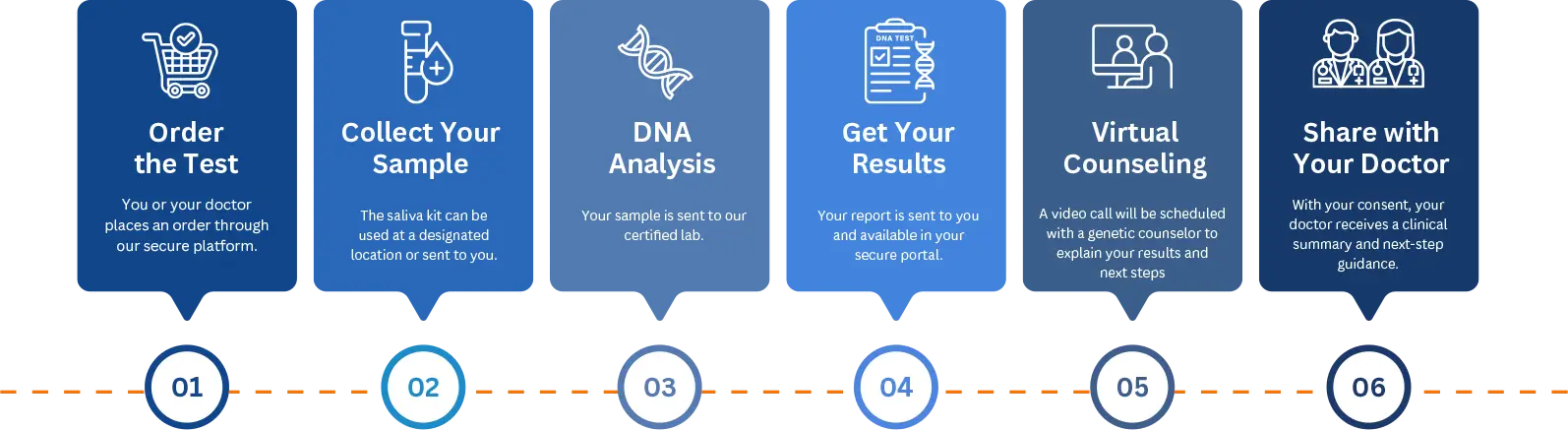
How It Works - Step By Step
The test is powered by the innovative Blended Genome Exome™ technology, developed in collaboration with Broad Clinical Labs at Harvard University and the Massachusetts Institute of Technology.
The technology combines 95.5× whole-exome sequencing (WES) with genome-wide low-coverage whole-genome sequencing (lcWGS) to detect both rare pathogenic variants and polygenic risk with high analytical precision.
Testing is performed through CAP/CLIA accredited laboratories, with advanced analytics support from Allelica and the Laboratory for Molecular Medicine (Mass General Brigham), and regional collaboration with Novo Genomics.
Equipped with one of the most precise and comprehensive genomic risk assessments available, the test integrates monogenic and polygenic risk into a single, clinically actionable report.
Results are ready in 4 to 8 weeks, enabling you to act early and make informed, proactive health decisions.