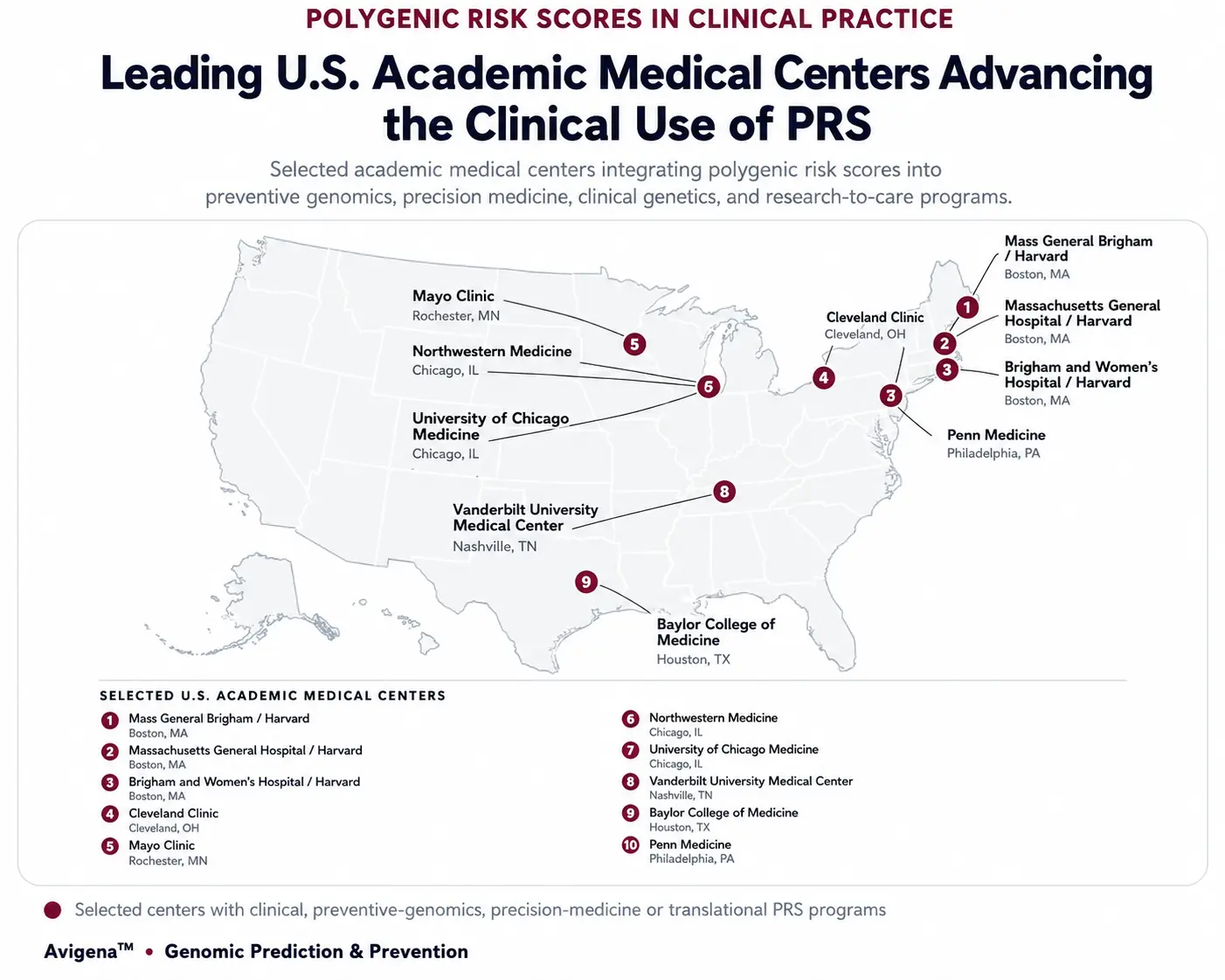
Understanding your genetic risk just got more precise. A Polygenic Risk Score (PRS) is a one-time, saliva-based DNA test that analyzes thousands to millions of genetic variants (SNPs) to estimate an individual’s inherited risk of developing conditions such as heart disease, breast cancer, or prostate cancer—years before the disease begins.
Understanding your genetic risk just got more precise. A Polygenic Risk Score (PRS) is a one-time, saliva-based DNA test that analyzes thousands to millions of genetic variants (SNPs) to estimate an individual’s inherited risk of developing conditions such as heart disease, breast cancer, or prostate cancer—years before the disease begins.
Presented by Akl Fahed, MD, MPH (Interventional Cardiologist & Physician-Scientist)
Massachusetts General Hospital & Harvard Medical School
Member, Broad Institute
Overview
Polygenic risk scores (PRS) are transforming cardiovascular prevention by enabling earlier identification of inherited risk for atherosclerotic cardiovascular disease. In this webinar, Dr. Fahed reviews the evidence supporting PRS and their recognition as risk-enhancing factors in the 2026 ACC/AHA Dyslipidemia Guidelines, highlighting their role in risk stratification and precision cardiovascular prevention.
Originally presented at the Lebanese Society of Cardiology Regional Conference (June 2026).
A comprehensive, MENA-focused approach integrating polygenic risk scores (PRS), monogenic variant testing, clinical factors, and lifestyle to deliver individualized Breast Cancer prevention strategies.