NPJ | Cardiovasc Health, part of the Nature Portfolio

Economic Modeling of Polygenic Risk Prediction of Coronary Artery Disease in Childhood

This landmark study published in npj Cardiovascular Health showed that childhood polygenic risk score (PRS)-guided prevention for coronary artery disease (CAD) could enable earlier targeted intervention, reduce future cardiovascular events, and generate major long-term health and economic benefits. The study projected that early identification of high-risk children could prevent 72 CAD events per 10,000 children and achieve a return on investment (ROI) exceeding 3600%, supporting a shift toward genome-first, early-life preventive cardiology.

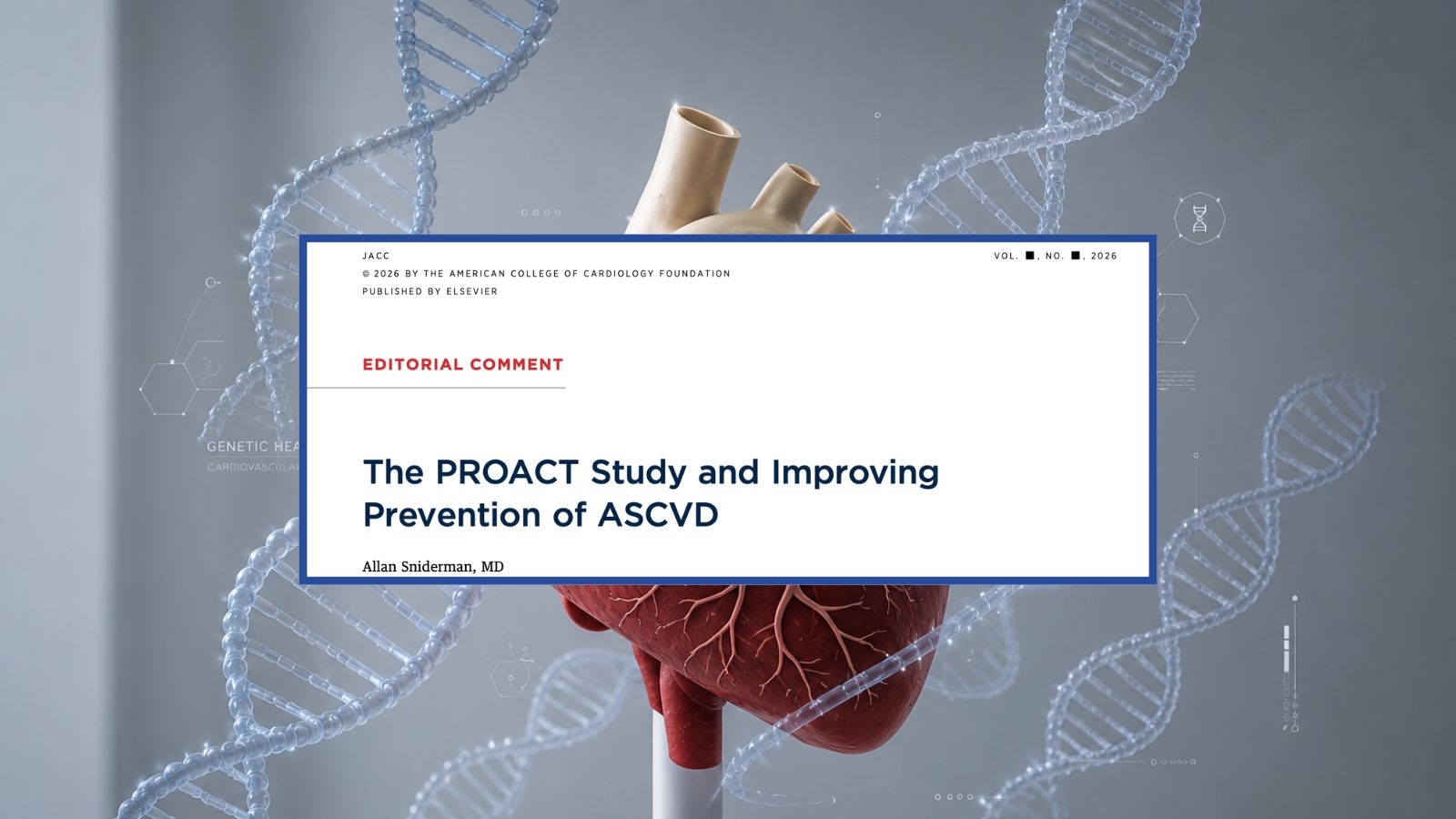
JACC | The PROACT Study and Improving Prevention of ASCVD

The PROACT Study and Improving Prevention of ASCVD

The editorial highlights that the PROACT study introduces a novel genome-first strategy using polygenic
risk scores (PRS) to identify individuals who appear low-risk by traditional calculators but frequently
harbor subclinical coronary artery disease. It argues that prevention must evolve beyond age-based risk
models toward earlier, causal-factor–guided intervention integrating genomics, imaging, and targeted
therapy. 

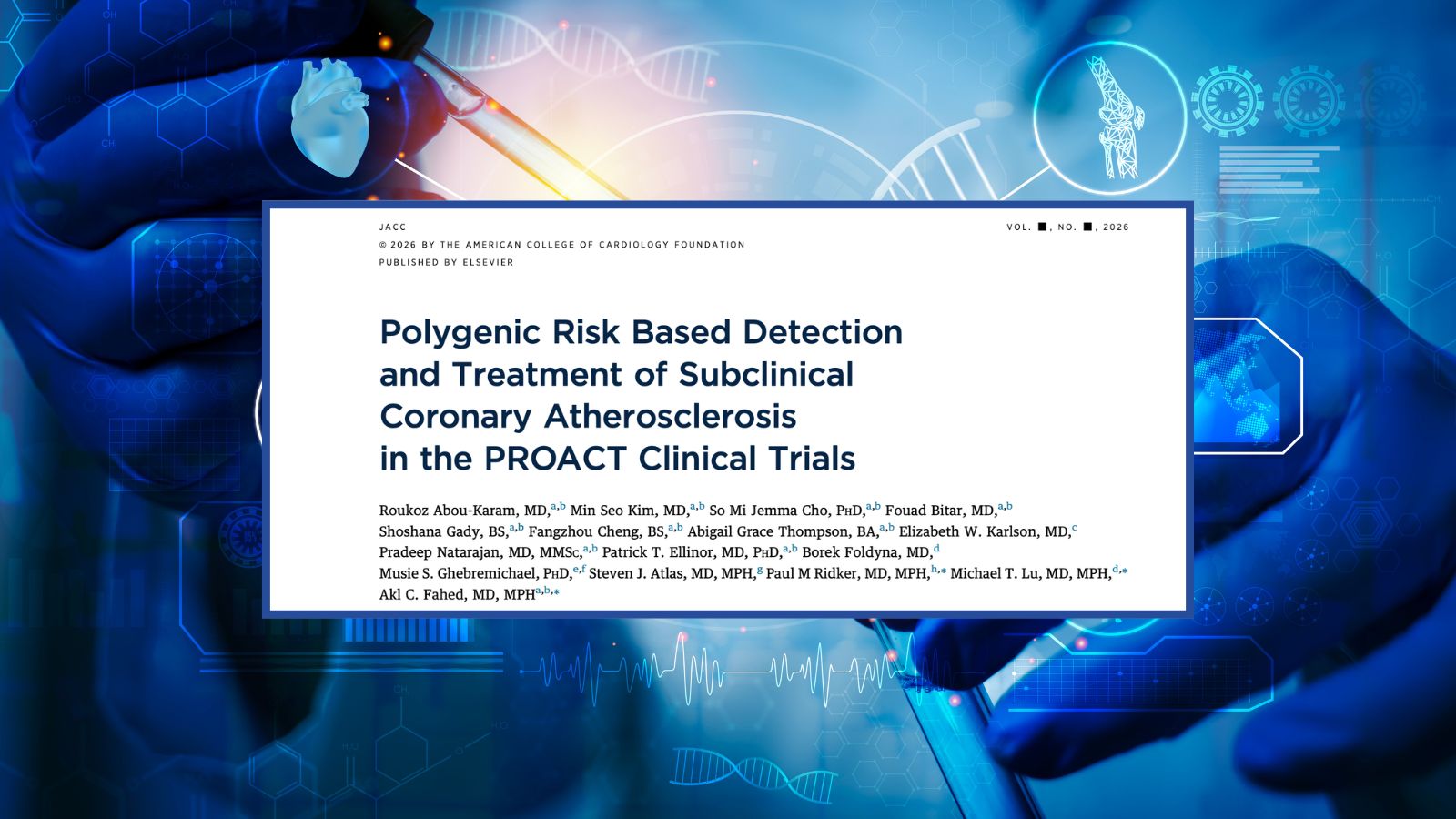
JACC | Polygenic Risk Based Detection and Treatment of Subclinical Coronary Atherosclerosis in the PROACT Clinical Trials

Polygenic Risk Based Detection and Treatment of Subclinical Coronary Atherosclerosis in the PROACT Clinical Trials

This Landmark JAMA 2026 PROACT trials showed that adults with high coronary artery disease (CAD)
polygenic risk scores but low clinical risk were prospectively identified from a biobank and evaluated
with coronary CT angiography, demonstrating that about half had previously undetected subclinical
plaque despite favorable cardiovascular health. These findings show the feasibility of genome-first
prevention strategies and suggest that polygenic risk–guided identification could enable earlier targeted
pharmacologic prevention in individuals overlooked by conventional risk models. 

Pamphlet | Breast Cancer

Learn More About OmniInsight™ Breast Cancer Program

A comprehensive, MENA-focused approach integrating polygenic risk scores (PRS), monogenic variant testing, clinical factors, and lifestyle to deliver individualized breast cancer prevention strategies.


Download File

Learn more

JAMA | Risk-Based vs Annual Breast Cancer Screening

Risk-Based vs Annual Breast Cancer Screening The WISDOM Randomized Clinical Trial

This landmark JAMA 2025 trial showed that PRS-powered risk-based breast cancer screening was non-inferior to annual screening and was associated with an approximately one-third lower rate of advanced cancer.
This landmark JAMA 2025 WISDOM trial showed that PRS-powered risk-based breast cancer screening was non-inferior to annual screening and was associated with an approximately one-third lower rate of advanced (stage ≥IIB) cancers (30.0 vs 48.0 per 100,000 person-years), with nearly doubled uptake of preventive therapy among the highest-risk women, establishing PRS-guided screening as a scalable and clinically sound strategy.

The New England Journal of Medicine | Assessment of a Polygenic Risk Score in Screening for Prostate Cancer

This landmark NEJM 2025 study showed that PRS-guided screening uncovers many high-risk prostate cancers missed by standard PSA pathways.

This landmark NEJM 2025 study showed that PRS-guided screening of men in the top genetic risk decile substantially improves detection of clinically significant prostate cancer, uncovering many high-risk cancers missed by standard PSA pathways, and establishes PRS-based risk stratification as a scalable, clinically impactful screening strategy.